
The Most Common Space Planning Mistakes Homeowners Make (And How to Fix Them)
Space planning is the difference between a home that looks pretty and a home that actually works. For professional women in transition—empty nesters, retirees, and women reinventing a new chapter—your space needs to support how you live now, not how you lived ten years ago.
But here’s the problem: most people jump straight to furniture, paint, and décor. They buy a new sofa, order a rug, and hang art—then wonder why the room still feels “off.” The truth is simple: space planning comes first. Once the layout is right, everything else gets easier (and far less overwhelming).
Below are the most common space planning mistakes homeowners make—plus the best ways to correct them so your home feels calm, spacious, and beautifully you.
Mistake #1: Buying Furniture Before Measuring the Room
This is the classic. You fall in love with a sofa online, and it arrives… only to swallow the room, block a walkway, or make everything feel tight.
The fix: Measure, map, and mock it up
Before you buy:
- Measure the room (length, width, ceiling height).
- Note windows, doors, and where they swing.
- Record outlets, vents, and fireplaces.
- Measure key existing pieces you’re keeping.
Then do one of these:
- Use painter’s tape to outline furniture sizes on the floor.
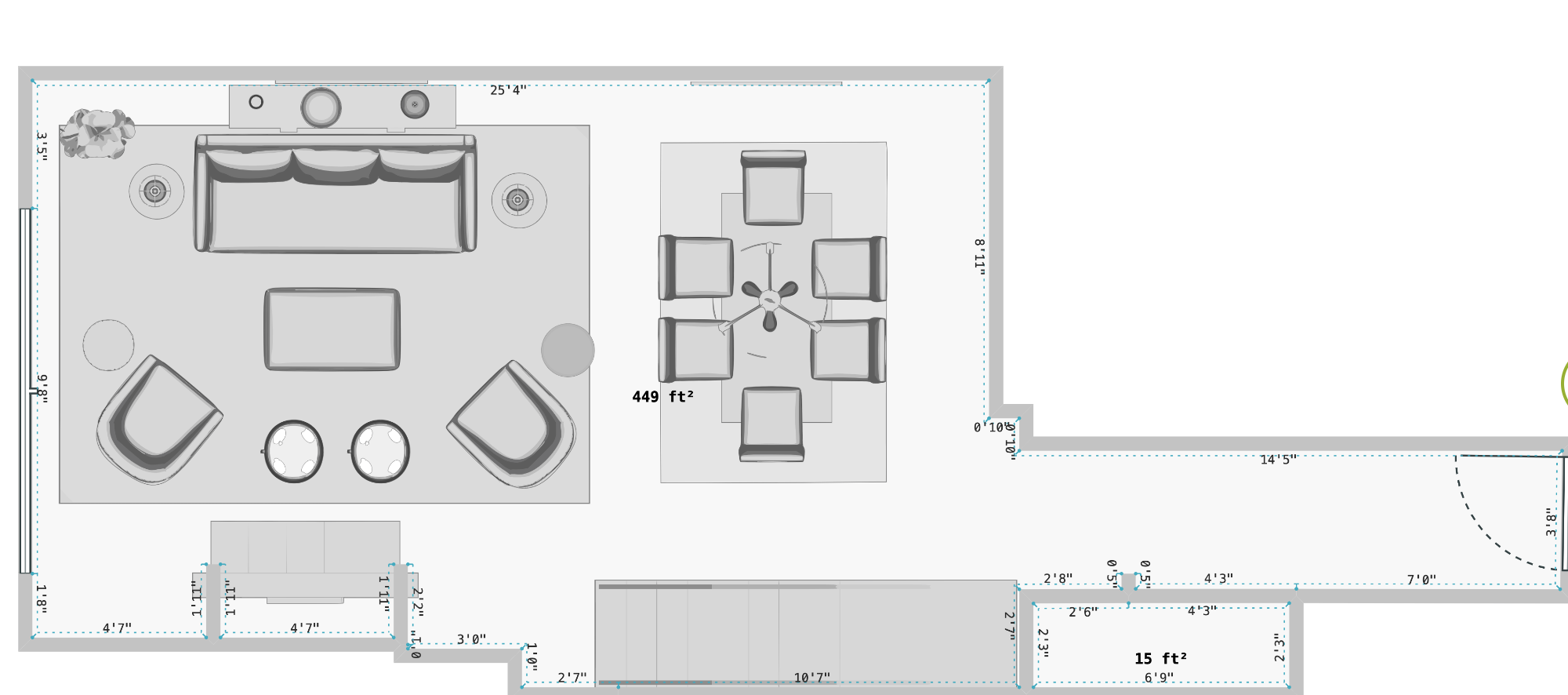
- Create a simple scaled floor plan (even a basic grid sketch works).
- Use cardboard templates to test footprints.
Pro tip: In living rooms, aim for 30–36 inches for main walkways. In tighter areas, 24 inches can work, but it will feel snug.
Mistake #2: Pushing All the Furniture Against the Walls
Many homeowners think pushing furniture to the perimeter makes a room feel bigger. It rarely does. Instead, it often creates an empty “dance floor” in the middle and makes conversation feel disconnected.
The fix: Float pieces and create zones
Try pulling the sofa and chairs in so they form a defined conversation area. Add an area rug to “anchor” the zone.
If you have an open concept space, create clear zones:
- Conversation area
- Reading corner
- Dining area
- Work-from-home nook
This is especially helpful during transitions—when a guest room becomes a studio, or the “kids’ room” becomes a wellness space.
Design cue: If your rug feels lost, your furniture grouping is probably too spread out. Most front legs of seating should sit on the rug.
Mistake #3: Ignoring How You Actually Move Through the Room
Even beautiful rooms feel stressful when you’re constantly navigating around corners, side tables, or awkward chair placement.
The fix: Prioritize circulation paths
Space planning is really about flow. The best layouts make movement effortless.
Check your room for:
- Blocked door swings
- Tight passageways
- Furniture corners sticking into walkways
- Traffic paths cutting through conversation areas
Quick test: Walk the room carrying a laundry basket. If you bump into anything, your layout needs editing.
For many clients in their late 50s to early 70s, circulation matters more than ever. A well-planned room reduces daily friction and makes the home feel supportive and easeful.
Mistake #4: Choosing the Wrong Scale (Too Big or Too Small)
Scale is one of the biggest reasons a space feels “off,” even when every piece is lovely.
Common scale problems:
- A sectional that dominates the room
- Tiny rugs that make furniture look awkward
- An undersized coffee table that’s hard to use
- Petite art floating on a large wall
The fix: Use proportional guidelines
Try these general rules:
- Coffee table: about 2/3 the length of your sofa
- Coffee table height: within 1–2 inches of sofa seat height
- Rug size: large enough to fit at least the front legs of all seating
- Dining chandelier: about 1/2 to 2/3 the width of the table
- Artwork above a sofa: about 2/3 the width of the sofa
When scale is right, your home feels polished—without needing more stuff.
Mistake #5: Forgetting Function (The Room Looks Good But Doesn’t Live Well)
A room can be magazine-worthy and still be frustrating. This happens when layout decisions prioritize aesthetics over real life.
The fix: Plan around daily rituals
Ask yourself:
- Where do you put your coffee or tea?
- Where do you read, journal, or unwind?
- Do you host friends for wine and conversation?
- Do you need a spot for stretching or yoga?
- Where does the dog bed go?
- Do you want seating for family holidays, or mostly intimate gatherings?
Then plan furniture placement to support those rituals.
For women reinventing their homes, this is powerful: space planning becomes a form of self-care. You’re designing for your current life—not someone else’s expectations.
Mistake #6: Poor Lighting Placement (And No Plan for Layering)
Space planning and lighting go together. If your layout blocks light sources or forces you into harsh overhead lighting, the room will feel flat and uncomfortable.
The fix: Use layered lighting and plan outlets early
A calm room usually includes:
- Ambient lighting (overhead or indirect)
- Task lighting (reading lamps, desk lamps)
- Accent lighting (art lights, picture lights, sconces)
Before locking your layout, identify:
- Where floor lamps can sit without being awkward
- Whether outlets are accessible
- Where cords will run (or how to conceal them)
Comfort upgrade: Add lighting near seating—especially for reading. It instantly makes a room feel warmer and more livable.
Mistake #7: Blocking Windows (Or Fighting Natural Light)
Natural light is one of your home’s greatest assets. But space planning mistakes often block it with tall furniture, heavy drapery, or awkward placement.
The fix: Keep sightlines open
Try these adjustments:
- Move tall bookcases away from windows when possible.
- Use lower-profile pieces under windows.
- Choose window treatments that stack back fully.
- Place mirrors strategically to bounce light.
This one change can make a room feel bigger, brighter, and more energizing—without any renovation.
Mistake #8: TV Placement That Runs the Room (Instead of Supporting It)
Many living room layouts revolve around the TV by default. But if the television dictates everything, you can lose comfort and connection.
The fix: Build the layout around conversation first
If you watch TV daily, absolutely include it. But don’t let it ruin your room.
Options:
- Place seating so it supports both conversation and viewing (an L-shape with swivel chairs works well).
- Use a media console with closed storage to reduce visual clutter.
- Consider mounting the TV or using a frame-style TV for a softer look.
- Create two focal points: fireplace + TV, balanced thoughtfully.
The goal is a living room that feels like a sanctuary—not an electronics showroom
Mistake #9: Too Much Furniture (Not Enough Breathing Room)
When space feels crowded, it’s rarely because your home is “too small.” It’s usually because there are too many pieces competing for space.
The fix: Edit and let the room breathe
Look for:
- Extra chairs that never get used
- Side tables that don’t serve a purpose
- Oversized ottomans that block movement
- Bulky pieces with no storage benefit
A well-edited room feels more luxurious—even if you haven’t bought anything new.
This is where “Beauty w/o Overwhelm” really comes to life: fewer, better pieces placed correctly.
Mistake #10: Ignoring Storage Needs (So Clutter Takes Over)
Even a perfect layout will fail if there’s nowhere for real-life items to land—mail, reading glasses, chargers, throws, and everyday essentials.
The fix: Include “drop zones” and closed storage
Add:
- A closed cabinet or console to hide clutter
- A tray on a coffee table for remotes
- A stylish basket for throws
- A drawer near the entry for keys and sunglasses
When storage is planned, the room stays calm longer—with far less effort.
Best Ways to Correct Space Planning Errors (Your Simple Action Plan)
If your home feels off, don’t start with shopping. Start here:
- Define the purpose of the room today. Not what it used to be.
- Measure everything. Room + furniture + key clearances.
- Identify your focal point. Fireplace, view, art wall, or TV.
- Create zones. Especially in open concept layouts.
- Prioritize flow. Make movement easy and natural.
- Choose correct scale. Rugs, tables, and seating should fit the room.
- Layer lighting. Place seating where light supports activities.
- Edit ruthlessly. Keep what serves function and joy.
- Plan storage. Prevent clutter before it starts.
A Gentle Reminder: Your Home Should Support Who You Are Now
Space planning isn’t just design—it’s a reset. If you’re entering a new season of life, your home can reflect that: lighter, calmer, more intentional, and more aligned with the woman you are today.
If you’re feeling stuck, you don’t need more Pinterest boards—you need a plan.
Ready for Beauty Without Overwhelm?
If you want a living space that feels effortless, personalized, and supportive, I can help you create a clear layout and furnishing plan that removes the guesswork (and decision fatigue). Reach out to schedule a Sanctuary Strategy Session and let’s make your home work beautifully for your next chapter. Call Creative Space Interiors at 510.501.1213 for a free 20-minute phone call to see how I can help with your space planning needs. And visit www.creativespaceinteriors.biz to find out more information.