
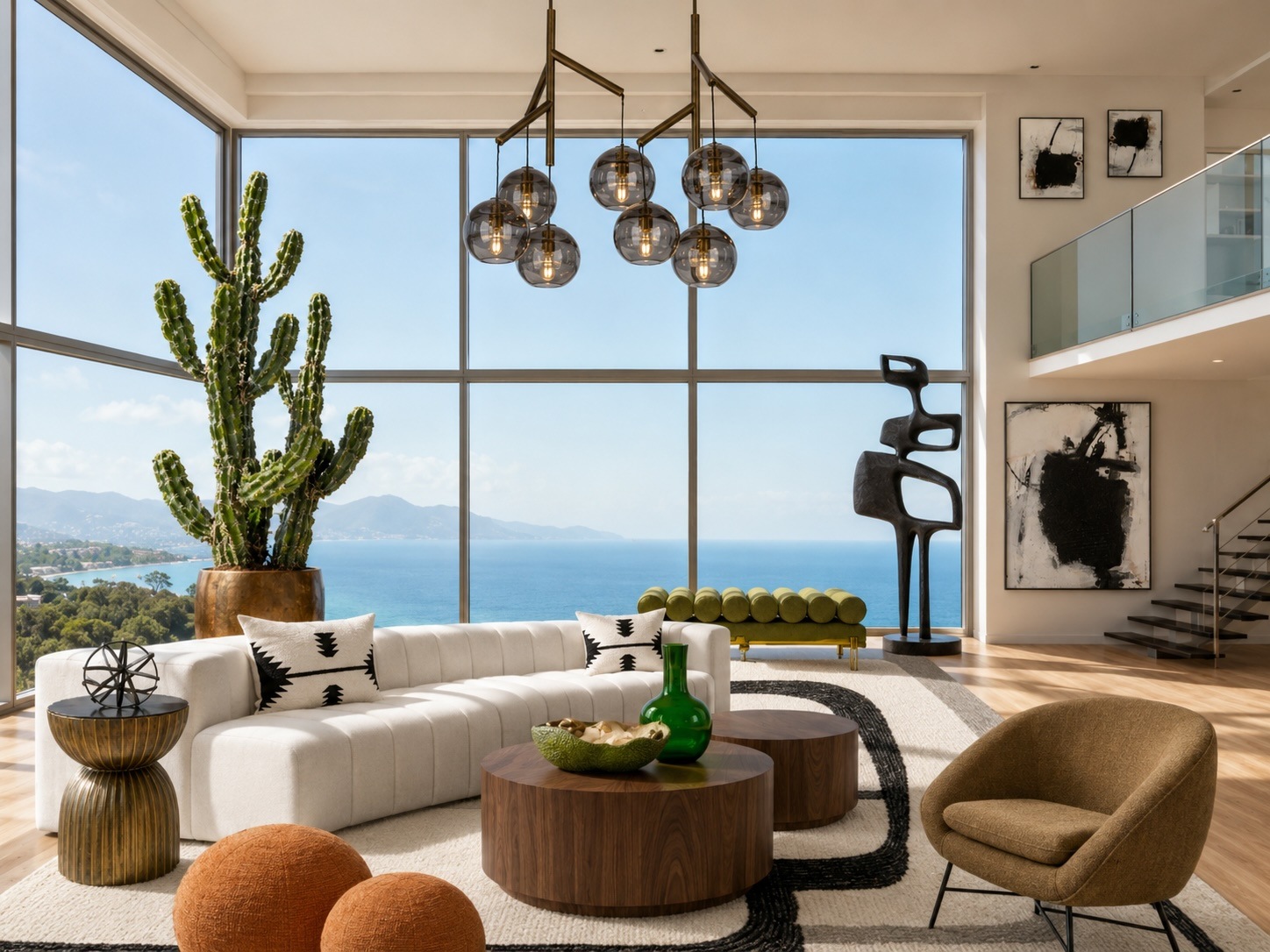
What Are the Three Best Design Styles for Creating a Sanctuary Home?
There’s a difference between a house that looks beautiful and a home that feels like a sanctuary.
A sanctuary home isn’t just well-decorated. It’s a space where you exhale the moment you walk through the door. Where the noise of the outside world fades and something deeper takes over: calm, comfort, and a sense of belonging. It’s a place designed around you: your rhythms, your needs, your definition of peace.
More and more homeowners are seeking exactly this. And for good reason. In a world that demands constant connection and productivity, your home may be the only place where you get to set the terms. The right interior design style makes that possible.
So which design styles are best suited for creating a sanctuary home? After years of helping clients transform their living spaces into true retreats, three approaches rise above the rest: Japandi, Soft Minimalism, and Biophilic Design. Each one has a distinct character but all three share a common philosophy. Less noise. More intention. Space to breathe.
Let’s explore each one.
-
Japandi: The Art of Calm Through Simplicity
If you’ve been searching for a design style that feels both timeless and deeply soothing, Japandi may be exactly what you’re looking for.
Japandi is a fusion of Japanese and Scandinavian design principles two traditions that, while geographically worlds apart, share a profound commitment to simplicity, craftsmanship, and living with only what matters. The result is an aesthetic that feels quietly elegant without being cold, and minimal without feeling empty.
What makes Japandi a sanctuary style?
At its core, Japandi is about the elimination of visual stress. Cluttered rooms create cluttered minds. Japandi interiors are carefully curated every object has a purpose and a place. The furniture is low-profile, the lines are clean, and the palette is rooted in nature: warm grays, soft whites, sand, muted terracotta, and deep charcoal.
Natural materials are central to the style. Think raw wood, woven rattan, linen, handmade ceramics, and stone. These textures add warmth and depth without competing for attention. They invite you to slow down, to notice, to appreciate the quiet beauty in things made well.
The Japanese concept of wabi-sabi, finding beauty in imperfection and impermanence, runs through everything. A hand thrown ceramic bowl. A weathered wood side table. A linen throw that softens with every wash. These are not flaws. They are character. And in a Japandi home, they are welcomed.
How to bring Japandi into your home:
Start by editing ruthlessly. Remove anything that doesn’t serve a functional or deeply meaningful purpose. Then layer in natural textures and materials in a neutral, earthy palette. Choose furniture with clean silhouettes and low profiles. Add a single piece of art, not a gallery wall, and let it breathe. Use warm, diffused lighting rather than harsh overhead fixtures.
The goal isn’t perfection. It’s presence.
-
Soft Minimalism: Warmth Without the Clutter
Traditional minimalism has a reputation for being stark, cold, and a little intimidating. All white walls and empty surfaces that feel more like a gallery than a home. Soft minimalism takes everything that works about minimalism and makes it livable, warm, and genuinely inviting.
This is one of the most powerful sanctuary design styles available to homeowners today, precisely because it balances two things that can feel at odds: simplicity and comfort.
What makes Soft Minimalism a sanctuary style?
Soft minimalism keeps the clean lines and uncluttered spaces of traditional minimalism but replaces the austerity with warmth. The palette leans into creamy whites, warm beiges, blush tones, dusty sage, and soft terracotta. The furniture is rounded rather than sharp. Think curved sofas, oval dining tables, arched doorways. The layers come from texture: boucle upholstery, chunky knit throws, velvet accent pillows, and matte plaster walls.
The visual result is calm, genuinely, deeply calm. There’s nothing competing for your attention. No pattern clashing with pattern. No surface overwhelmed with objects. Your nervous system can finally relax.
What elevates soft minimalism into sanctuary territory is its intentionality. Every piece in the room is chosen carefully. There’s no impulse-buy art on the wall, no furniture pushed into corners to fill space. Everything serves a purpose either functional or deeply personal.
How to bring Soft Minimalism into your home:
Begin with your palette. Warm neutrals are your foundation. Stay away from stark, cool whites and lean into the creamy, toasty end of the spectrum. Then invest in a few high-quality anchor pieces: a beautifully proportioned sofa, a solid wood dining table, a bed frame that feels as good as it looks.
Embrace negative space. Not every shelf needs to be filled. Not every wall needs art. The empty space is part of the design it gives the eye somewhere to rest.
Add texture in layers: a linen duvet, a jute rug, a ceramic lamp base. And edit constantly. If something isn’t pulling its weight, give yourself permission to let it go.
The result is a home that feels curated, peaceful, and entirely yours.
-
Biophilic Design: Bringing the Healing Power of Nature Indoors
Biophilic design is rooted in a simple but powerful truth: human beings are hardwired to connect with nature. We evolved outdoors. Our nervous systems respond to natural light, greenery, water, and organic forms in ways that reduce stress, lower blood pressure, improve mood, and sharpen focus.
Biophilic design takes that instinct and builds it into your home intentionally, beautifully, and in ways that have a measurable impact on how you feel every single day.
What makes Biophilic Design a sanctuary style?
Unlike trends that are purely aesthetic, biophilic design is backed by research. Studies consistently show that exposure to natural elements, even indoors, activates the parasympathetic nervous system, the part of your body responsible for rest and recovery. In other words: nature literally helps you relax.
In a biophilic home, you’ll find abundant natural light, generous greenery, natural materials like wood and stone, water features, and views to the outdoors wherever possible. The color palette mirrors the natural world: forest greens, earthy browns, warm terracottas, sky blues, and stone grays.
Plants are a cornerstone. Not a small succulent on a windowsill, but genuinely considered greenery: large-leaf tropicals, hanging plants, floor-to-ceiling shelving filled with living things. The goal is to blur the boundary between inside and outside as much as your space allows.
Texture matters too. Natural wood grain. Rough stone. Woven grass. These surfaces engage your senses in ways that smooth, synthetic materials simply cannot. They remind your body on a primal level that you are somewhere safe, nourishing, and alive.
How to bring Biophilic Design into your home:
Start with light. Maximize every natural light source you have. Remove heavy drapes, add mirrors to bounce light deeper into rooms, consider a skylight if renovation is on the table. Light is the single most powerful tool in a biophilic designer’s toolkit.
Then bring in plants; more than you think you need. Start with species that are hardy and forgiving: pothos, snake plants, fiddle leaf figs, monstera. As your confidence grows, layer in more variety.
Choose natural materials wherever possible: hardwood floors, stone countertops, linen and wool textiles. Avoid plastics and high-gloss synthetic surfaces. Add a small water feature even a simple tabletop fountain if the sound of moving water resonates with you.
Finally, connect your interior to your exterior. A view of a garden, a window that opens to a patio, outdoor furniture that extends your living space beyond your walls. These connections deepen the biophilic effect enormously.
Combining Styles: The Most Powerful Approach
Here’s what many homeowners don’t realize: these three styles work beautifully together. In fact, some of the most stunning sanctuary homes we design at Creative Space Interiors blend elements from all three.
A Japandi foundation with biophilic layers, clean lines, natural materials, and abundant greenery, creates a space that is both visually quiet and deeply alive. Add soft minimalist touches in the bedroom — a curved upholstered headboard, a creamy boucle throw, warm diffused lighting and you have a room that functions as a true retreat.
The key is not to follow any one style rigidly, but to understand the principles behind each one: intentionality, natural materials, warmth, simplicity, and a genuine respect for how your environment affects the way you feel.
When those principles guide every design decision, the result is a home that doesn’t just look beautiful. It feels like sanctuary.
Your Sanctuary Home Starts Here
Creating a sanctuary home is one of the most meaningful investments you can make, not just financially, but in your daily quality of life. The right design doesn’t just change how your home looks. It changes how you live, how you rest, and how you show up for everything else in your life.
At Creative Space Interiors, we specialize in designing homes that feel as good as they look. We take the time to understand who you are, how you live, and what your version of sanctuary looks and feels like. Then we build it with intention, expertise, and a genuine passion for the process.
Ready to create your sanctuary home?
Call us today at 510.501.1213 or visit www.creativespaceinteriors.biz to schedule your complimentary design consultation. Your sanctuary is closer than you think.