
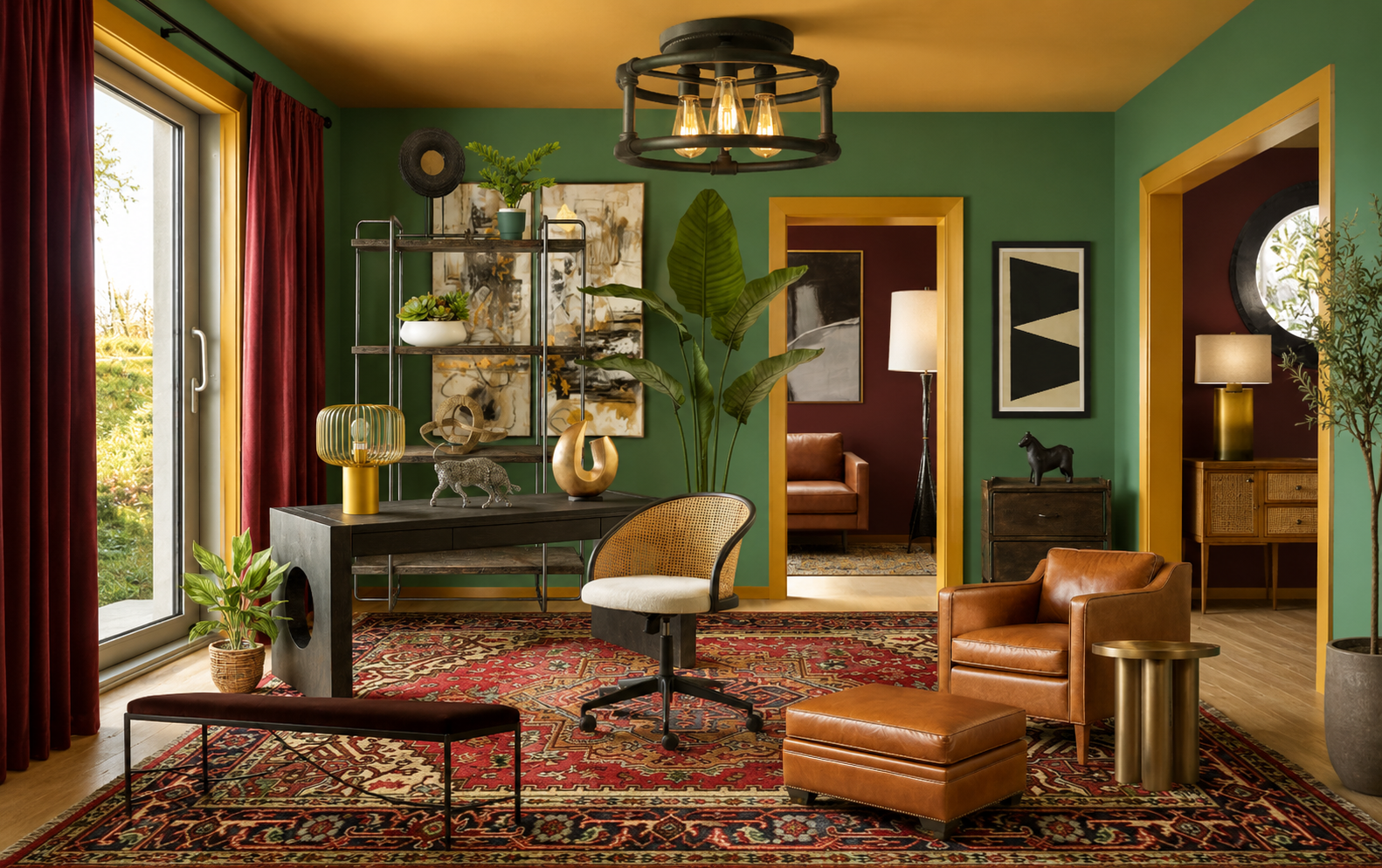
The Design Mistake Many People Make Trying to Match Everything
Picture this. You walk into a living room where everything matches. The sofa, loveseat, and armchair come from the same set. The end tables are twins. The lamps are a perfect pair. Even the throw pillows repeat the exact shade of the curtains.
At first glance, it looks neat. It looks finished. Yet after a moment, something feels off. The room seems stiff. It feels more like a furniture store than a home.
If that sounds familiar, you’re not alone. Trying to match everything is one of the most common interior design mistakes we see. It’s also one of the easiest to fix. In this post, we’ll explain why matching backfires, and how to create a home that feels pulled together, personal, and full of life instead.
Why We Try to Match Everything in the First Place
First, let’s be fair. Matching comes from a good place. Most of us want our homes to look tidy and well planned. We don’t want to make a mistake. And matching feels like a safe bet.
For years, furniture stores have encouraged this habit. They sell sofas in sets. They display bedroom suites with a matching bed, dresser, and nightstands. They stage rooms so every piece looks like part of one package. Naturally, we assume that’s how a “real” room should look.
In addition, many of us grew up in homes where matching was the rule. A formal dining set was a sign of success. A coordinated bedroom suite meant you’d “arrived.” These ideas stick with us, even when our taste changes.
Finally, matching saves time. When you buy a set, you don’t have to make many choices. That’s appealing, especially during a busy season of life.
Why Matching Everything Backfires
However, a home is not a showroom. Here’s why a perfectly matched room often falls flat.
It Lacks Personality
A matched room tells you where the furniture came from. It doesn’t tell you who lives there. Your home should reflect your travels, your memories, and your taste. When everything comes from one catalog page, your story gets lost.
It Feels Flat and One-Note
Good design needs contrast. Rooms come alive when you mix light and dark, smooth and rough, old and new. When every piece shares the same wood tone, fabric, and shape, the eye has nowhere to rest. As a result, the room looks flat, even if it’s beautiful on paper.
It Looks Dated Faster
Furniture sets tend to reflect one moment in time. Because every piece shares the same style, the whole room ages at once. On the other hand, a mixed and layered room feels timeless. It looks like it grew over years, not like it arrived on one truck.
It Makes Change Harder
Furthermore, matching locks you in. If one piece breaks or wears out, you can’t replace it without the room looking odd. And if your taste shifts, the whole set has to go. That’s costly and wasteful.
The Better Approach: Coordinate, Don’t Match
So, what’s the alternative? The secret is to coordinate instead of match. Coordinated pieces relate to each other without being identical. They share a common thread, such as color, mood, or shape. Yet each piece still has its own character.
Think of it like a well-dressed woman. She doesn’t wear a jacket, pants, shoes, and bag all in the same fabric. Instead, she pairs colors and textures that work together. The look feels polished, but also personal. Your home can work the same way.
Here are five simple ways to make that shift.
1. Choose a Color Palette, Not a Color
To begin, pick a palette of three to five colors that you love. Include one or two main colors, a supporting shade, and a neutral or two.
Next, use those colors in different tones and amounts. For example, if your palette includes blue, you might use navy on a velvet chair, soft sky blue in a rug, and a deep indigo in a painting. The colors relate, but they don’t copy each other. As a result, the room feels rich and layered.
2. Mix Wood Tones and Metal Finishes
Many people believe all wood must match. In reality, mixing wood tones adds warmth and depth. A walnut coffee table can sit beautifully beside an oak bookcase. The key is to repeat each tone at least twice in a room so it looks intentional.
Similarly, you can mix metals. Brass lamps, iron curtain rods, and a silver-framed mirror can all live together. To keep it calm, choose one main metal and one or two accents.
3. Layer Textures and Patterns
Next, think about texture. A room with only smooth surfaces feels cold. A room with many textures feels inviting. Try pairing a linen sofa with a wool rug, a velvet pillow, a woven basket, and a ceramic vase.
Patterns work the same way. Mix one large pattern, one medium pattern, and one small pattern. For instance, combine a bold floral rug, a striped pillow, and a small geometric throw. As long as the colors connect, the patterns will feel lively rather than busy.
4. Break Up the Furniture Set
If you already own a matching set, you don’t need to throw it out. Instead, split it up. Move one of the twin end tables to the bedroom. Place the matching armchair in a reading nook. Then bring in a vintage piece or a chair in a different fabric.
This small change makes a big difference. Suddenly, the room looks curated rather than purchased. It’s an easy and budget-friendly way to refresh your space.
5. Let Art and Meaningful Objects Lead
Finally, let your personal treasures guide the room. Art, books, pottery, family photos, and travel finds bring a sense of story that no furniture set can.
Here’s a helpful trick. Choose one piece of art you love. Then pull colors from it for your pillows, throws, and rug. The art becomes the anchor, and everything else coordinates with it. This creates harmony without sameness.
Quick Room-by-Room Tips
Now that you know the basic approach, let’s look at how it works in a few key rooms.
Living room. Skip the three-piece sofa set. Instead, pair a sofa with two chairs in a different fabric or style. Add a coffee table in a contrasting material, such as stone, glass, or reclaimed wood.
Dining room. Try mixing chairs around your table. Upholstered host chairs at each end can add softness and style. Or, use the same chair shape in two colors for a playful but balanced look.
Bedroom. Your nightstands don’t have to be twins. Choose two different pieces with a similar height. Then tie them together with matching lamps or a shared color.
Entry. Your entry sets the tone for your whole home. So, choose one bold piece, such as a colorful rug or a striking mirror. Then add a small table with a personal object or two.
How to Know When You’ve Got It Right
At this point, you may wonder how to tell coordinated from chaotic. Fortunately, there’s a simple test. Stand in the doorway and look around the room. Then ask yourself these questions:
- Do I see my main colors repeated at least three times?
- Is there a mix of textures, from soft to smooth to rough?
- Does at least one piece tell a story about my life?
- Does my eye move easily around the room?
- Does the space feel calm and inviting, not stiff?
If you can say yes to most of these, you’re on the right track. If not, try one small change at a time. Swap a pillow. Move a lamp. Add a piece of art. Often, a single shift makes the whole room click.
A Note for Women in a New Chapter
For many of the women we work with, this lesson arrives at just the right time. Perhaps the kids have moved out. Perhaps you’ve retired or downsized to a smaller home. In any case, this is a wonderful moment to let go of old rules.
You no longer need a home that looks like everyone else’s. Instead, you can create a space that reflects the woman you are today. That might mean bold color, global textiles, and art from a favorite trip. Or it might mean soft tones, natural textures, and a cozy reading corner. Either way, it should feel like you.
The Bottom Line
In the end, matching everything is a safe choice, but it rarely creates a home with heart. The most beautiful rooms feel collected over time. They mix colors, textures, styles, and stories. Above all, they reflect the people who live in them.
So, give yourself permission to break the set. Coordinate instead of match. Start with a palette you love, layer in texture, and let your art lead. Before long, your home will feel warmer, richer, and far more personal.
Ready to Create a Home That Feels Like You?
At Creative Space Interiors, we help Bay Area women create colorful, artful homes that feel like a true sanctuary. We work with furnishings, artwork, rugs, and decor, so there’s no construction and no remodel required. Whether you’re starting fresh or refreshing what you have, we’ll help you find the perfect balance between pulled together and personal.
If your home feels too matched or too much like a showroom, let’s talk. Schedule a consultation with our Oakland interior design studio, and let’s create a home that tells your story. Call today at 510.501.1213 and visit us at www.creativespaceinteriors.biz