
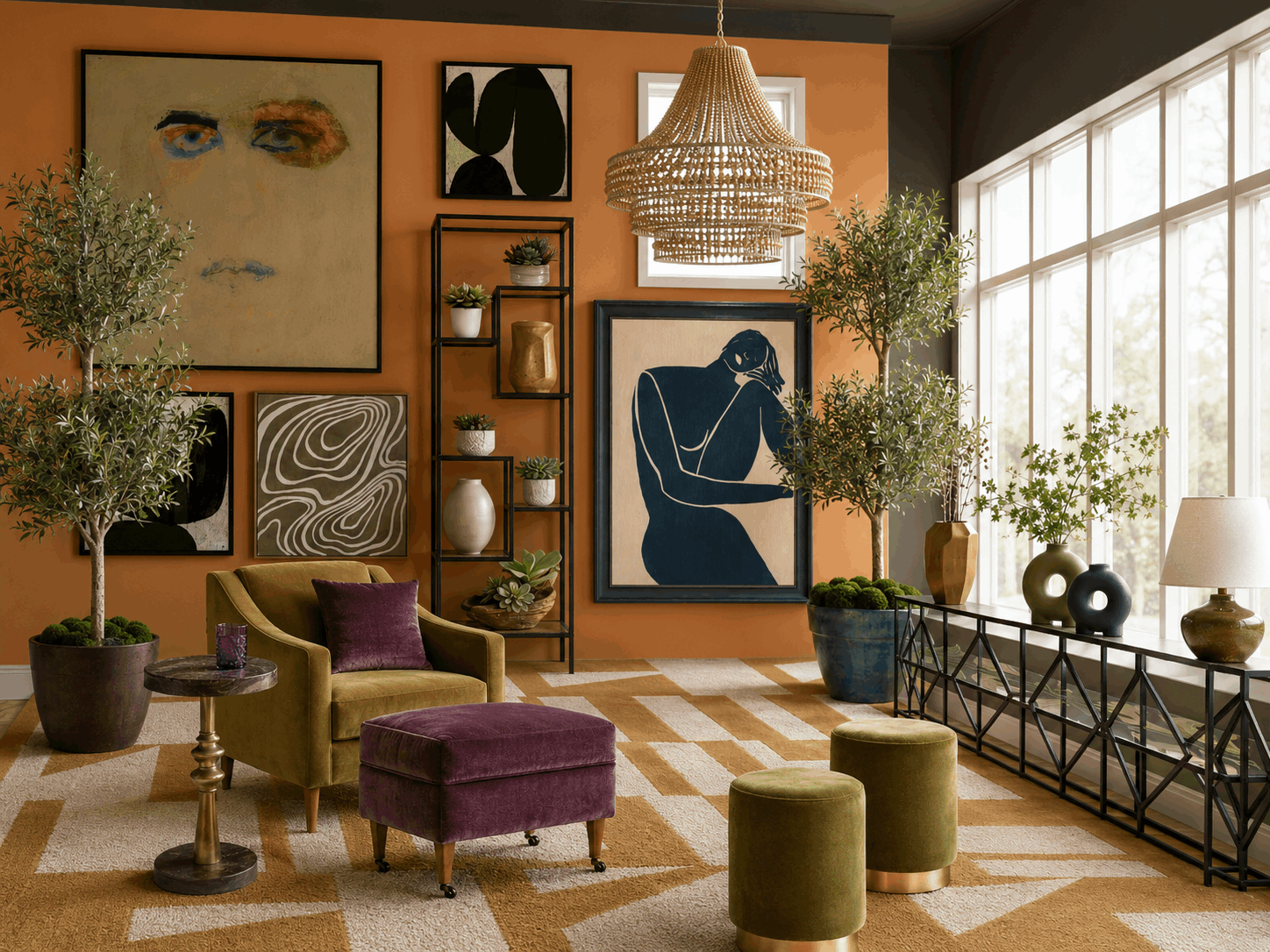
How Do Empty Nesters Redesign Their Home for a New Chapter?
The last box is packed. The car pulls out of the driveway. You stand in the doorway of a bedroom that still smells like your child and realize for the first time in decades that this house is yours again.
It’s a moment that arrives with a complicated mix of emotions. Pride. Relief. A deep, quiet love. And often, something unexpected: the sudden awareness that your home was designed for a life you no longer live. The extra bedrooms. The playroom that became a storage room. The dining table that seats eight for a family of two. The spaces that once hummed with noise and activity now feel a little too still, a little too large, a little too much like a museum of a chapter that has closed.
Here’s what that feeling is telling you: it’s time.
The empty nest phase is not a loss. It’s an opening one of the most significant opportunities you’ll ever have to redesign your home around who you actually are right now, not who you were twenty years ago. And when you approach it with intention, the result is a home that doesn’t just look different. It feels like freedom.
Why the Empty Nest Is the Perfect Time to Redesign
For most parents, the home has been a family-first environment for the better part of two decades. Every design decision from the durable upholstery to the kid-proof flooring to the bunk beds that somehow never got disassembled was made in service of the family. Your personal style, your aesthetic preferences, your vision of how a home could feel? Often set aside, compromised, or simply never fully expressed.
That changes now.
The empty nest redesign is uniquely powerful for several reasons. First, you have space literal, physical space that is suddenly available for reinvention. Second, you have clarity. You know yourself far better at this stage of life than you did when you last had free rein over your home. You know what brings you joy, what helps you relax, how you like to spend a quiet evening, and what kind of environment supports the life you want to live now. Third, you have the opportunity to make your home a true reflection of this chapter not a holdover from the last one.
This isn’t about erasing the past. It’s about honoring the present.
Step 1: Walk Through Your Home With Fresh Eyes
Before you make a single purchase or call a single contractor, do something deceptively simple: walk through every room of your home as if you’re seeing it for the first time.
Ask yourself honest questions. Which rooms do you actually use? Which spaces feel stuck in the past? Where do you gravitate naturally and why? Which areas feel too large, too formal, or too disconnected from how you live now?
Many empty nesters discover that their home has essentially been divided into zones: the parts they use every day and the parts that exist in a kind of quiet limbo. A formal dining room used twice a year. A family room organized around a television that no longer gets watched. A mudroom built for backpacks and sports gear that now sits empty.
This honest audit is the foundation of a great redesign. It tells you where to invest your energy and your budget and where you have the freedom to reimagine entirely.
Take notes. Take photos. And set aside what these rooms used to be. The question isn’t what they were. It’s what they could become.
Step 2: Reclaim the Spaces That Were Never Yours
This is often the most exciting part of the empty nest redesign: the rooms that are opening up.
The kids’ bedrooms, the playroom, the homework station in the corner of the kitchen these spaces were built around someone else’s needs. Now they’re available. And the possibilities are genuinely expansive.
The former kids’ bedroom might become a guest room but it might also become a home office, a reading room, an art/crafts studio, a meditation space, or a dedicated dressing room. Think about what you’ve always wanted but never had room for and ask whether one of these newly available spaces could finally make it possible.
The formal dining room is one of the most commonly reimagined spaces in empty nest redesigns. If you no longer host large family dinners regularly, that room may be working far too hard to justify its square footage. Many homeowners transform it into a library, a sitting room, a bar and entertaining lounge, or a combination home office and hobby space. A room that was used a handful of times a year can become a space you genuinely love every single day.
The family room often needs the most significant rethinking. Spaces organized around children’s activities such as homework, gaming, movie nights for groups rarely serve two adults well. Redesigning it around your version of relaxation and connection creates a room you’ll actually want to spend time in.
The key question for every newly available space is this: What do I actually want to do with my time now? Your home should support that answer.
Step 3: Right-Size Your Furniture and Layout
One of the most common challenges empty nesters face is furniture that was scaled for a fuller house. Large sectional sofas that once fit a family of five for movie night can dwarf a living room when there are only two people using it. Dining sets that seated eight can make a dinner for two feel lonely and disconnected.
Right-sizing your furniture is not about downsizing your life it’s about creating spaces that feel appropriately intimate and intentional for the way you live now.
In the living room, consider replacing an oversized sectional with a more refined sofa and a pair of chairs arranged for genuine conversation. In the dining area, a round table for four often creates a warmer, more welcoming atmosphere than a long rectangular table that emphasizes empty seats.
As you rethink your furniture, take the opportunity to finally invest in pieces that reflect your personal style not the compromise style that survived years of family life. The velvet sofa you always loved but considered impractical. The antique dining chairs that never made sense with young children around. The white linen duvet that seemed like an impossible dream. These choices are now entirely within reach.
Step 4: Develop Your Personal Design Identity
Here’s something many empty nesters discover when they begin the redesign process: they’re not entirely sure what their personal style is. When your home has been a family environment for decades, your own aesthetic preferences can get buried under layers of practicality, compromise, and other people’s needs.
Rediscovering your design identity is one of the most rewarding parts of this process and one of the most important.
Start by gathering inspiration without editing yourself. Pull images from design publications, websites such as Pinterest, and social media that genuinely appeal to you not what you think you should like or what seems practical. Look for patterns in what you’re drawn to. Are you consistently pulled toward calm, neutral spaces? Bold color and collected eclecticism? The warmth of natural materials and organic forms? The clean precision of a more contemporary aesthetic?
This is also the moment to think about how you want your home to feel, not just look. Do you want it to feel like a serene retreat — quiet, uncluttered, deeply restful? Or do you want it to feel vibrant and alive, filled with art and books and the evidence of a life richly lived? Both are beautiful. Both are valid. What matters is that the answer is genuinely yours.
A professional interior designer is an invaluable partner in this process. A skilled designer helps you articulate what you want, translate it into a cohesive vision, and execute it in a way that feels authentic, considered, and completely personal.
Step 5: Create Spaces That Support Your Next Chapter
The most powerful empty nest redesigns don’t just refresh existing spaces they actively support the life you want to build in this new chapter.
Think about your priorities now. Maybe travel is a bigger part of your life, and you want a home that’s easy to maintain and even easier to leave. Maybe you’re pursuing creative work and need a dedicated studio space. Maybe wellness has become central and you want a bedroom that functions as a genuine sanctuary with a reading nook, blackout curtains, and an atmosphere that supports deep, restorative sleep.
Maybe, for the first time in a long time, your home can simply be beautiful. Not child-proof. Not durable-above-all-else. Just beautiful, in the way that only a home designed around an adult life can be.
That possibility is closer than you think.
Your New Chapter Deserves a Home to Match
The empty nest is not an ending. It’s the beginning of something you’ve been working toward for twenty years a life with space, freedom, and the room to become exactly who you want to be.
Your home should reflect that. Not who you were when the kids were small. Not a compromise between everyone’s needs. Just you and your style, your rhythms, your vision of what a beautiful life looks like.
At Creative Space Interiors, we specialize in helping empty nesters redesign their homes for this exact moment. We know this transition is emotional as well as practical, and we bring both design expertise and genuine care to every project we take on.
Let’s build the home your next chapter deserves.
Call us today at 510.501.1213 or visit www.creativespaceinteriors.biz to schedule your complimentary design consultation. Your next chapter starts here.